How the 7 Vital Conditions* guide the Buhl Regional Health Foundation’s work and strategies for a healthier Mercer County.
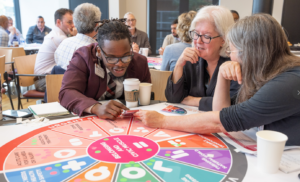
Image courtesy of The Rippel Foundation.
When people hear the name Buhl Regional Health Foundation (BRHF), with a focus on health, it’s understandable that they think about urgent services from hospitals, doctors, and medical care.
Urgent services are essential, and direct benefits from access to quality healthcare will always matter. What we’ve learned through our work focused on lasting impact, however, is that the benefits of well-being begin long before someone enters a doctor’s office. It starts in our homes, our schools, our workplaces, our parks, and our neighborhoods. It grows from the opportunities available to us, the relationships we build, and the environments in which we live.
At Buhl Regional Health Foundation, we are continually learning about what helps communities thrive. When groups thrive they can experience vigorous growth and flourish. Through conversations with residents, nonprofit partners, educators, healthcare providers, local leaders, and young people themselves, we’ve gained a deeper understanding of the many factors that influence well-being in our region.
We’ve also spent time studying what research tells us about creating lasting, meaningful change. Again and again, the evidence points to the same conclusion: health and well-being are shaped by far more than access to medical care alone.
As we explored different approaches to community well-being, we were introduced to the Rippel Foundation’s “7 Vital Conditions for Health and Well-Being* framework. What resonated was its recognition that we and the people of Mercer County don’t experience life in separate categories. Housing affects education. Education influences employment opportunities. Transportation impacts access to jobs, services, and social connections. A sense of belonging can influence everything from mental clarity and emotional wellness to civic participation.
The framework gave language and terminology to something we were already seeing throughout our work: when communities invest in the factors that help people feel connected, supported, secure, and empowered, better outcomes often follow.
Rather than focusing only on the challenges people face, the Vital Conditions framework encourages communities to strengthen the fundamentals that help everyone thrive. It provides a way to think about well-being holistically and helps organizations like ours identify opportunities to create impact that is both meaningful and lasting.
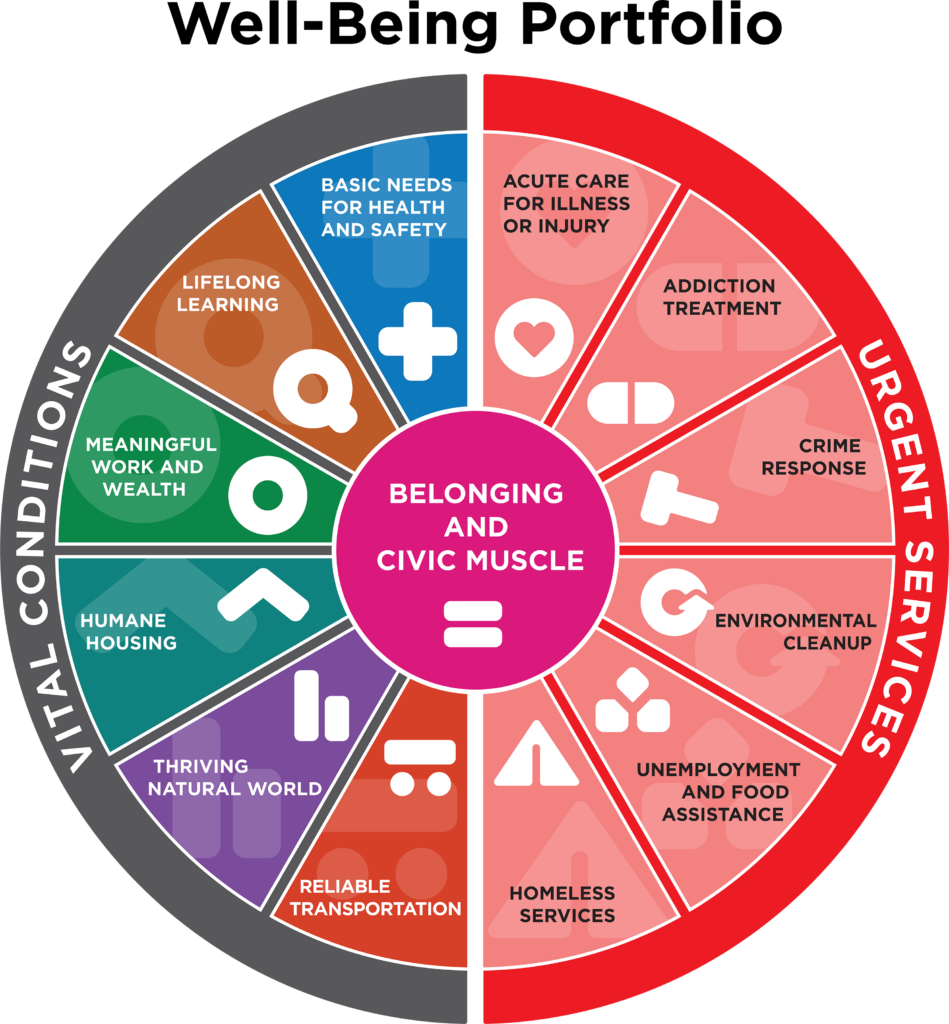
Infographic credit: Rippel Foundation
Today, the framework serves as a guide for how BRHF thinks about our investments, partnerships, and programs. It helps us look beyond immediate needs and consider how we can contribute to a community where every person has the opportunity to live, learn, work, and belong.
The framework identifies seven interconnected elements that help individuals and communities thrive: Basic Needs for Health and Safety, Humane Housing, Meaningful Work and Wealth, Lifelong Learning, Reliable Transportation, Thriving Natural World, and Belonging and Civic Muscle.
What’s most important about these seven elements isn’t that they exist individually; it’s that they work together.
Think about a young family in our community. A child may have access to excellent healthcare, but if the family lacks stable housing, struggles to find childcare, has no reliable transportation, or feels disconnected from the community, that child is still likely to face challenges that affect their well-being.
On the other hand, when families have safe places to live, opportunities to learn, meaningful employment, supportive relationships, and access to community resources, they are better positioned to succeed and thrive.
Each element strengthens the others.
A child who participates in a quality early learning program is better prepared for school. Their parents are better able to maintain employment. Increased family stability reduces stress. Stronger economic security creates opportunities for healthier choices. Connections formed through schools, programs, and community activities foster a sense of belonging.
The result is not just better outcomes for one child or one family, but a stronger community overall.
This understanding shapes how we make decisions at Buhl Regional Health Foundation as we strive to meet our mission to improve the overall well-being of our region through strategic investments in community-driven initiatives that make a lasting impact.
When we evaluate opportunities, we look beyond immediate outcomes and ask how an investment might strengthen the broader systems that support well-being.
One example of this systemic thought process is our Childcare Expansion Program. In 2024, after identifying childcare access as a significant challenge for families across Mercer County, BRHF invested in three local providers: Building Blocks Child Center, Baughman Family Community Center, and Zion Education Center at St. John’s Academy. While each organization faced different challenges, all shared the goal of increasing access to quality childcare. Funding supported expanded classroom space, additional staffing, improved learning environments, and extended service hours to better meet the needs of working families. Through a single initiative, we were able to support children’s early learning and development while also helping parents participate in the workforce and strengthening an essential community resource.
At first glance, childcare may not seem like a traditional health issue. Yet access to affordable, structured, high-quality childcare affects nearly every aspect of community well-being. Without childcare, parents may be unable to work, pursue education, or advance their careers. Children may miss opportunities for early learning and social development. Employers may struggle to attract and retain workers. Families may experience increased stress and financial hardship.
By supporting efforts to expand childcare capacity, we’re helping strengthen multiple Vital Conditions at the same time. Children gain opportunities to learn and grow. Parents gain greater economic stability. Employers benefit from a stronger workforce. Families build a stronger foundation for the future.
That’s the power of investing in reliable factors that shape well-being.
As BRHF continues to focus on youth, our efforts become even more important. The experiences young people have today will influence the future of our region for decades and generations to come. When children feel connected, supported, and empowered, they are more likely to become healthy, engaged, and resilient adults who then pass along these qualities to their children. When communities invest in young people, they are also investing in the entire community’s future.
Direct, traditional healthcare remains an important part of a thriving community, but it is only one piece of the puzzle. One of the Buhl Regional Health Foundation’s guiding principles is to help strengthen the broader ecosystem that allows well-being to take root and grow because lasting well-being isn’t built solely in hospitals or clinics. It’s built every day in homes, schools, workplaces, parks, and neighborhoods. When those pieces work together and are interconnected, entire communities have the opportunity to thrive holistically.
Explore the data surrounding the Vital Conditions theory here.
*Footnote Source: Created by the Rippel Foundation, the Seven Vital Conditions for Well-Being is a useful framework for conceptualizing holistic well-being and the Conditions that give rise to it, as well as identifying levers for community change and improvement. For more information, visit https://rippel.org/vital-conditions/.