
Summer in Pennsylvania means hiking trails, backyard barbecues, sports practices, camping trips, and long days spent outdoors. Unfortunately, it also means tick season!
While many people associate ticks with Lyme disease, health experts say there are several tick-borne illnesses and conditions Pennsylvanians should be aware of, including a lesser-known condition called alpha-gal syndrome — sometimes referred to as the “red meat allergy” caused by certain tick bites. The Pennsylvania Department of Health lists alpha-gal syndrome among the tick-related conditions that can affect residents of all ages, from children to grandparents.
The Tick Threat in Pennsylvania
Ticks can be found throughout Pennsylvania, not only in wooded areas but also in backyards, parks, sports fields, and areas with tall grass or leaf litter. According to the Pennsylvania Department of Health, residents should take precautions whenever spending time outdoors because many ticks found in the state can carry diseases that affect people across generations.
While Lyme disease remains the most commonly recognized tick-borne illness, Pennsylvania health officials also monitor conditions such as anaplasmosis, babesiosis, ehrlichiosis, Powassan virus, and alpha-gal syndrome.
The Tick Bite That Could Change What’s on Your Dinner Plate
One tick receiving increased attention is the Lone Star tick, an aggressive species now found in parts of Pennsylvania. Researchers have linked bites from this tick to alpha-gal syndrome, a condition that can cause allergic reactions after eating red meat and other mammal-derived products.
People with alpha-gal syndrome may experience symptoms ranging from hives and digestive issues to severe allergic reactions. Symptoms often occur several hours after eating foods such as beef, pork, lamb, or venison, making the condition difficult to recognize.
Health experts estimate that hundreds of thousands of Americans may be affected by alpha-gal syndrome, although many cases likely go undiagnosed.
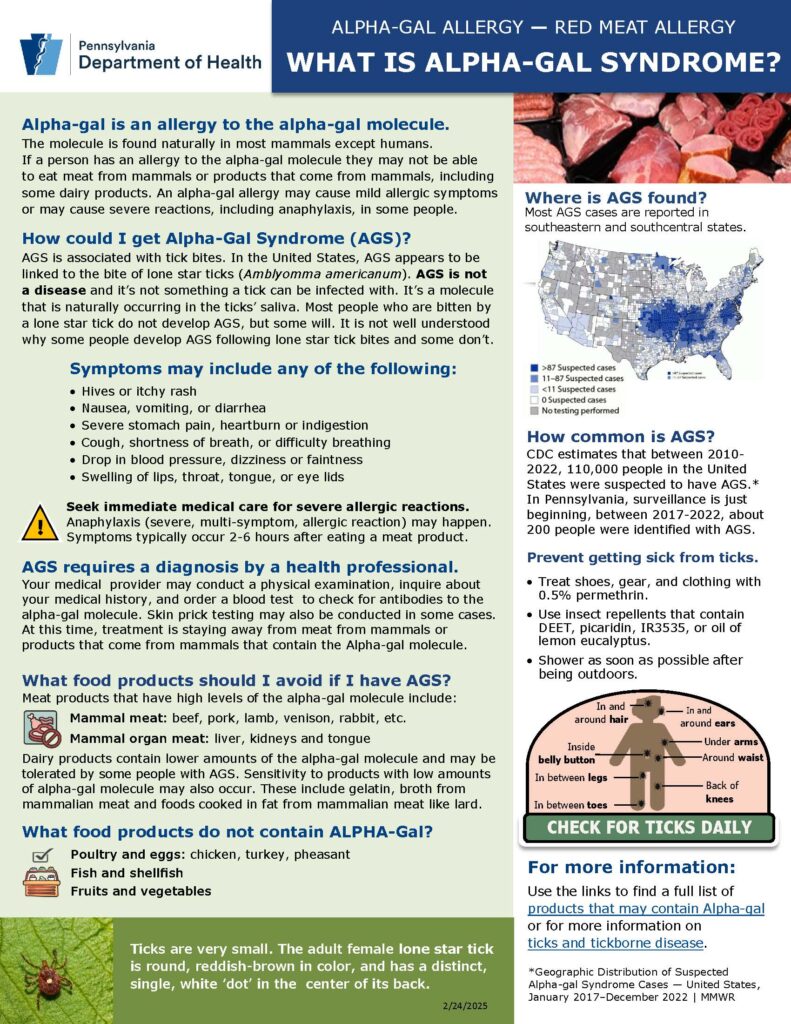
PA Department of Health offers guidance on tick-borne illness in Pennsylvania.
Prevention Is Still the Best Medicine
The good news is that the same steps that help prevent Lyme disease can also reduce the risk of other tick-related illnesses and conditions.
The Pennsylvania Department of Health recommends:
- Using EPA-registered insect repellents when spending time outdoors.
- Treating clothing and gear with permethrin (the insecticide and acaricide used to kill or repel insects like ticks and mosquitoes) when appropriate.
- Avoiding tall grass, brushy areas, and leaf litter when possible.
- Performing thorough tick checks after spending time outdoors.
- Showering soon after coming indoors.
- Promptly removing any attached ticks.
What To Do If You Find a Tick
Finding a tick doesn’t mean you will get sick. In fact, most tick bites do not result in illness. However, experts recommend removing ticks promptly and monitoring for symptoms in the days and weeks that follow.
Symptoms that warrant medical attention may include fever, rash, fatigue, joint pain, unusual allergic reactions, or other concerning or unusual symptoms following a tick bite.
Enjoy the Outdoors — Just Be Tick Aware!
Pennsylvania offers countless opportunities to enjoy the outdoors during the summer months. By taking a few simple precautions and checking for ticks after outdoor activities, families can continue to enjoy everything the season has to offer while reducing their risk.
For more information about tick prevention and tick-borne diseases, visit the Pennsylvania Department of Health’s tick disease resources http://health.pa.gov/ticks.
To read about measures that can be taken to reduce the chances of tick encounters and how to protect yourself — and your yard — from ticks, see this WHYY News article.